Hot and humid summer weather can create major challenges when storing hay. Excess moisture, poor airflow, and rising temperatures can quickly reduce hay quality and lead to mold, spoilage, and unnecessary waste.
Whether you’re storing hay for horses, livestock, or general farm use, proper storage plays a big role in protecting both your feed investment and your animals’ health.
In this guide, we’ll cover how to store hay during hot and humid weather and what steps you can take to keep your hay dry, fresh, and usable throughout the summer.
Why Hot and Humid Weather Can Damage Hay
Summer weather creates the perfect environment for moisture buildup and spoilage if hay is not stored properly.
Moisture Creates Mold Risks
Humidity can trap moisture inside hay bales, especially if the hay wasn’t fully cured before storage.
When moisture builds up:
- Mold can develop
- Hay quality can decline
- Animals may refuse to eat it
Moldy hay can also create health concerns for animals and should never be ignored.
Heat Buildup and Spoilage
Poor ventilation can trap heat inside stacked hay.
This heat buildup may:
- Reduce nutritional value
- Cause hay to break down faster
- Increase the risk of spoilage over time
In severe situations, excessive heat buildup can become dangerous.
Feed Waste and Financial Loss
Spoiled hay often leads to:
- Increased feed waste
- More replacement costs
- Lower feeding efficiency
Protecting your hay during summer helps reduce unnecessary losses.
Store Hay in a Dry, Covered Area
One of the best ways to protect hay during hot and humid weather is to keep it covered and dry.
Why Indoor Storage Is Best
Barns and covered storage areas provide:
- Protection from rain and humidity
- More stable storage conditions
- Better airflow management
Indoor storage is typically the most reliable long-term option.
Using Tarps and Covered Structures
If indoor storage isn’t available, tarps and temporary covers can help protect hay from direct moisture exposure.
However, it’s important to:
- Avoid trapping moisture underneath tarps
- Allow airflow whenever possible
- Keep hay elevated off the ground
Keep Hay Off the Ground
Ground moisture is one of the most common causes of hay damage during summer.
Ground Moisture Causes Problems
Hay stored directly on soil or concrete can absorb moisture from below.
The bottom bales are usually the first to:
- Develop mold
- Lose quality
- Break down prematurely
Best Ways to Elevate Hay
To reduce moisture problems, store hay on:
- Wooden pallets
- Gravel bases
- Hay racks or platforms
Elevating hay improves airflow and helps keep bales dry.
Allow Proper Airflow Around Hay
Ventilation is critical during hot and humid weather.
Why Ventilation Matters
Airflow helps:
- Reduce trapped humidity
- Prevent excessive heat buildup
- Keep hay drier for longer periods
Poor airflow creates conditions where mold and spoilage develop faster.
Avoid Stacking Too Tightly
Packing hay too tightly together can trap moisture and heat between bales.
When possible:
- Leave space between stacks
- Avoid overcrowded storage areas
- Improve airflow throughout the storage space
Watch for Signs of Spoiled Hay
Regular inspections can help catch storage problems early before more hay is damaged.
Mold and Dust
Watch for:
- White or gray mold spots
- Excess dust during handling
- Damp or clumped sections
Heat and Odors
Spoiled hay may:
- Feel unusually warm
- Have a musty or sour smell
These are signs moisture and heat are becoming a problem.
Color Changes
Healthy hay is usually green and fresh-looking.
Hay that appears:
- Brown
- Darkened
- Faded or brittle
may be losing quality.
Rotate Hay Properly During Summer
Using a proper rotation system helps prevent older hay from sitting too long during humid months.
Use Older Hay First
A “first in, first out” approach helps:
- Reduce spoilage risk
- Keep hay moving through storage
- Improve feed consistency
Monitor Long-Term Storage
Even well-stored hay should be checked regularly during summer.
Inspect for:
- Moisture issues
- Mold development
- Heat buildup
especially during long periods of humidity.
Does Hay Type Affect Storage Needs?
Different hay types can respond differently to heat and humidity.
Grass Hay vs Alfalfa
Alfalfa is often denser and richer, while grass hays may allow more airflow depending on bale structure.
Storage needs can vary based on:
- Bale density
- Moisture content
- Hay type
Cutting Differences
Softer, leafier later cuttings may require closer monitoring because they can hold moisture differently than coarse first cuttings.
Why Quality Hay Matters Before Storage
Good storage starts with high-quality hay.
Properly Cured Hay Stores Better
Hay that is properly dried and cured before baling is:
- Less likely to mold
- Easier to store safely
- More stable during humid weather
Starting with Quality Reduces Risk
High-quality hay generally:
- Holds up better over time
- Maintains nutritional value longer
- Produces less waste during storage
Protecting Hay During Summer Weather
Hot and humid weather can create serious storage challenges, but proper preparation makes a big difference.
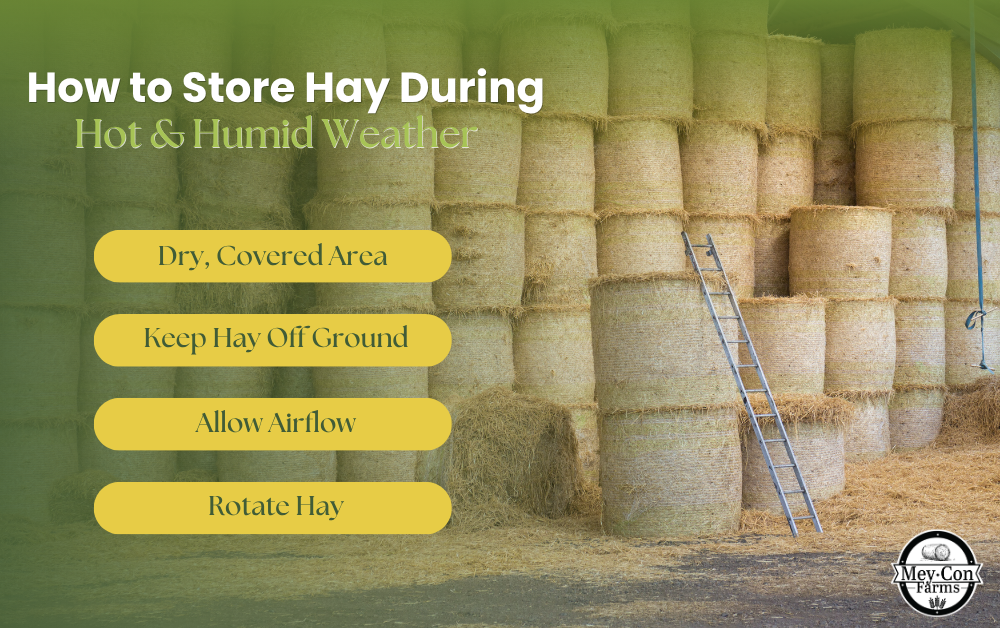
The best ways to protect hay include:
- Keeping it dry and covered
- Elevating it off the ground
- Improving airflow
- Inspecting it regularly
Good storage practices help preserve hay quality, reduce waste, and support healthier feeding programs throughout the summer.
Looking for High-Quality Hay This Summer?
At Mey-Con Farms, we provide high-quality hay and straw designed to hold up through the demands of summer feeding and storage.
We offer:
- Multiple hay types and cutting options
- Bulk and recurring delivery services
- Reliable supply across Pennsylvania, Maryland, Virginia, and West Virginia
Whether you need hay for horses, livestock, or general farm use, we’re here to help.