Not all hay is created equal—especially when it comes to feeding horses. While some hay may be acceptable for general livestock use, horses often require cleaner, more consistent forage to support proper digestion, performance, and overall health.
That’s where the term “horse quality hay” comes in.
But what actually makes hay horse quality?
In this guide, we’ll explain the key factors that separate horse-quality hay from lower-grade forage and what horse owners should look for when choosing hay.
What Does “Horse Quality” Hay Mean?
Horse-quality hay refers to hay that meets higher standards for:
- Cleanliness
- Moisture content
- Texture
- Nutritional consistency
Because horses can be more sensitive than some other livestock, hay quality plays a major role in their feeding program.
Hay Intended for Equine Feeding
Horse-quality hay is generally:
- Cleaner and less dusty
- More consistent in texture and appearance
- Properly cured and stored
It’s selected and handled with horse feeding in mind.
Why Hay Quality Matters for Horses
Poor-quality hay may contribute to:
- Digestive problems
- Reduced feed intake
- Respiratory irritation from dust or mold
High-quality forage supports:
- Healthy digestion
- Consistent energy levels
- Better overall condition
Horse Quality Hay Should Be Clean and Mold-Free
One of the biggest indicators of horse-quality hay is cleanliness.
Why Mold Is Dangerous
Moldy hay can create serious problems for horses, including:
- Respiratory irritation
- Reduced appetite
- Digestive concerns
Even small amounts of mold can negatively affect sensitive animals.
Signs of Poor-Quality Hay
Hay may not be horse quality if it contains:
- Excess dust
- Musty or sour smells
- Visible mold
- Dark discoloration
High-quality hay should look and smell fresh.
Texture and Softness Matter
Texture is another important factor when evaluating hay quality.
Softer Hay Is Often Preferred
Many horses prefer hay that is:
- Softer
- Leafier
- Easier to chew
Soft hay can also improve feed intake and digestibility.
Stemmy vs Leafy Hay
Hay that is extremely coarse or stem-heavy may:
- Be harder to chew
- Create more waste
- Reduce palatability
Leafier hay often indicates better forage quality and more balanced nutrition.
Proper Moisture Levels Are Important
Moisture content has a major impact on hay quality and safety.
Hay Should Be Properly Cured
Horse-quality hay is properly dried before baling to help:
- Prevent mold growth
- Reduce spoilage risk
- Improve storage life
Why Wet Hay Causes Problems
Hay with excess moisture may:
- Trap heat
- Lose nutritional value
- Develop mold during storage
Proper curing is essential for producing safe, reliable forage.
Nutritional Quality Plays a Big Role
Different horses require different feeding programs, which means nutritional quality matters.
Protein and Fiber Balance
The ideal hay depends on:
- Activity level
- Age
- Weight goals
- Overall nutritional needs
Some horses need higher-protein hay, while others benefit more from balanced fiber-rich forage.
Hay Type Matters
Different hay types offer different nutritional profiles:
- Timothy Hay: Balanced, fiber-rich daily feeding
- Orchardgrass Hay: Softer texture and digestibility
- Alfalfa Hay: Higher protein and energy
- Mixed Hay Blends: Balanced nutrition and fiber support
Choosing the right type is an important part of a quality feeding program.
Does Hay Cutting Affect Horse Quality?
Yes—cutting can significantly impact texture, nutrition, and digestibility.
First vs Second vs Third Cutting
- First cutting: More coarse and fiber-heavy
- Second cutting: Softer and more balanced
- Third cutting: Leafier and richer
Choosing the Right Cutting
Many horse owners prefer:
- Second cutting for balanced feeding
- Softer later cuttings for improved palatability
The right cutting depends on your horse’s needs and feeding goals.
Color and Smell Can Reveal Hay Quality
Appearance is one of the easiest ways to evaluate hay quickly.
Healthy Hay Appearance
Horse-quality hay typically has:
- A bright green color
- A fresh, clean smell
- Minimal dust
Warning Signs
Avoid hay that appears:
- Brown or faded
- Damp or clumped
- Musty or moldy
These signs may indicate poor curing or storage conditions.
Why Consistency Matters in Horse Hay
Consistency is often overlooked, but it’s an important part of horse feeding.
Reliable Feeding Programs
Horses generally do best when:
- Hay quality stays consistent
- Sudden forage changes are minimized
- Nutritional balance remains stable
Importance of a Trusted Supplier
Working with a reliable supplier helps ensure:
- Consistent hay type and quality
- Availability throughout the season
- Dependable delivery schedules
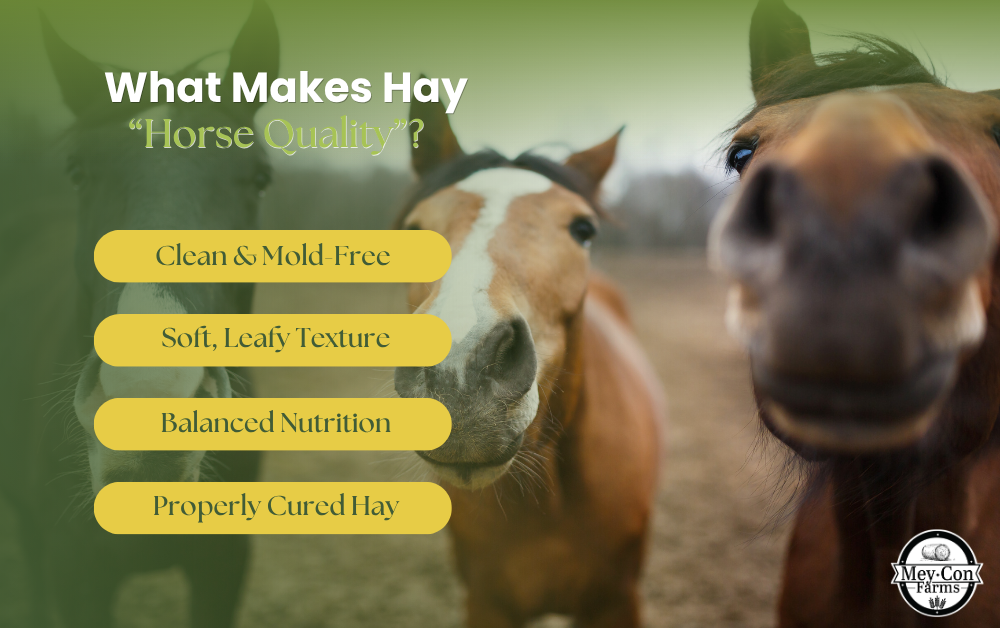
Choosing High-Quality Hay for Horses
Horse-quality hay is about more than appearance—it’s about safety, nutrition, and consistency.
The best horse hay should be:
- Clean and mold-free
- Properly cured
- Soft and palatable
- Nutritionally balanced
Choosing the right hay and supplier can make a major difference in your horses’ health and feeding success.
Looking for Horse Quality Hay?
At Mey-Con Farms, we provide premium horse-quality hay designed to support healthy, consistent feeding programs.
We offer:
- Timothy, Orchardgrass, Alfalfa, and mixed hay options
- Multiple cutting choices
- Bulk and recurring delivery services
- Delivery across Pennsylvania, Maryland, Virginia, and West Virginia
Whether you need hay for a few horses or an entire facility, we’re here to help.