For many animal owners, winter feeding season arrives faster than expected. Pastures begin slowing down, temperatures drop, and animals become more dependent on stored forage to meet their nutritional needs.
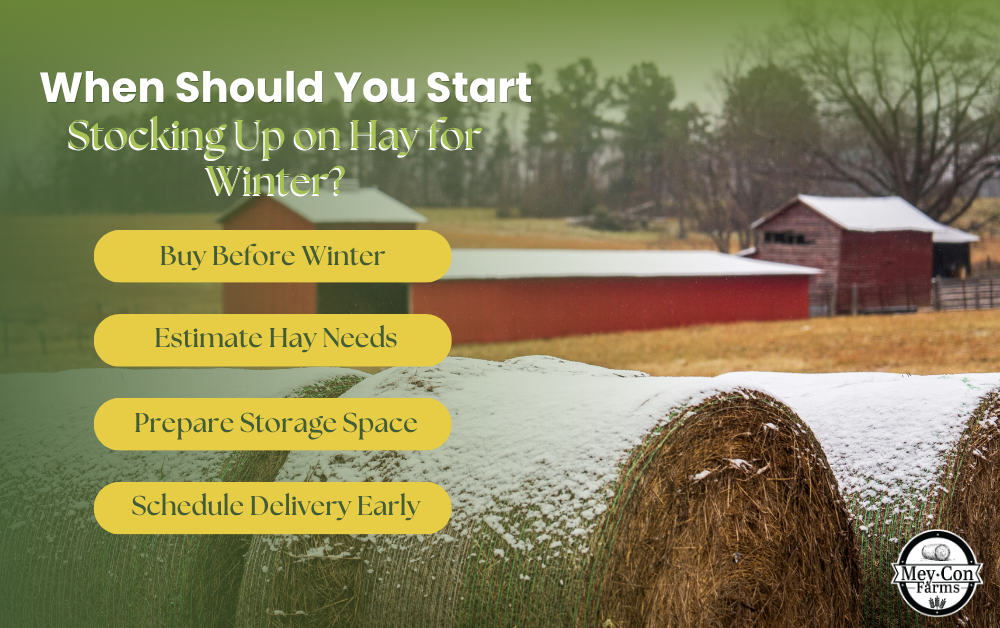
One of the best ways to avoid stress during the colder months is to start planning your hay supply before winter arrives. Waiting until the last minute can limit your options and make it harder to secure the hay types and quantities you need.
So when should you start stocking up on hay for winter? Let’s take a closer look.
Why Winter Hay Planning Matters
Planning ahead helps ensure your animals have a consistent source of quality forage throughout the winter months.
Animals Depend More on Hay During Winter
As temperatures cool and pasture growth slows, animals rely more heavily on stored hay.
This is especially true for:
- Horses
- Cattle
- Goats
- Sheep
- Mixed-animal farms
Without adequate forage, animals may struggle to maintain healthy body condition during the winter season.
Winter Feeding Needs Can Increase
Many animals naturally consume more forage during colder weather because digestion helps generate body heat.
Having enough hay available helps:
- Support healthy weight maintenance
- Meet nutritional needs
- Reduce stress during severe weather conditions
Planning ahead helps ensure you’re prepared when forage demands increase.
When Should You Start Buying Hay for Winter?
The best time to start thinking about winter hay is often earlier than many people expect.
Why Late Summer and Early Fall Are Ideal
Late summer and early fall are typically excellent times to secure winter hay supplies.
Benefits of buying early include:
- Better hay selection
- More available cutting options
- Time to organize storage
- Greater flexibility in delivery scheduling
Buying before winter demand increases can make planning much easier.
Avoid Waiting Until the Last Minute
Waiting until late fall or winter can create challenges such as:
- Reduced hay availability
- Fewer forage options
- Delivery scheduling limitations
- Increased stress when supplies run low
By planning ahead, you can focus on selecting the right hay instead of scrambling to find available inventory.
How Much Hay Should You Stockpile?
Every farm and feeding program is different, so estimating your winter hay needs is an important step.
Consider Animal Type and Number
Your hay requirements will depend on:
- How many animals you feed
- Animal size and weight
- Species and nutritional needs
A few horses will require a different amount of forage than a larger livestock operation.
Estimate Your Winter Feeding Period
Consider:
- When pasture growth typically slows in your area
- How long animals will rely primarily on hay
- Local weather conditions
In many parts of Pennsylvania, Maryland, Virginia, and West Virginia, winter feeding can last several months.
Build a Safety Margin
It’s always wise to have additional hay available for:
- Severe weather events
- Longer winters
- Unexpected feeding increases
- Delivery delays
Running out of hay during winter can create significant challenges, so extra inventory often provides peace of mind.
What Types of Hay Should You Buy for Winter?
The best hay for winter depends on your animals and feeding goals.
Timothy Hay
Timothy hay is a popular option because it provides:
- Balanced nutrition
- High fiber content
- Consistent daily feeding support
For many horse owners, Timothy remains a dependable winter forage.
Orchardgrass Hay
Orchardgrass offers:
- A softer texture
- Excellent digestibility
- Reliable nutrition
Many animals find Orchardgrass highly palatable, making it a great choice for winter feeding.
Alfalfa Hay
Alfalfa provides:
- Higher protein levels
- Increased energy content
- Additional nutritional support
Some feeding programs incorporate alfalfa to help meet the needs of animals requiring additional calories.
Mixed Hay Options
Many farms also choose blended forage options such as:
- Timothy/Orchardgrass Mix
- Alfalfa/Orchardgrass Mix
These blends can provide balanced nutrition while offering the benefits of multiple forage types.
Do You Have Enough Storage Space?
Proper storage is just as important as purchasing quality hay.
Protect Hay from Moisture
Winter hay should be stored in a dry location that protects it from:
- Rain
- Snow
- Excess humidity
Moisture can quickly reduce hay quality and lead to spoilage.
Improve Airflow
Good ventilation helps:
- Prevent mold growth
- Reduce heat buildup
- Maintain hay quality
Air circulation is an important part of long-term storage success.
Organize for Easy Rotation
Using older hay first helps maintain quality throughout the season.
A simple “first in, first out” approach can:
- Reduce waste
- Improve inventory management
- Keep feeding programs consistent
Why Bulk Hay Purchases Can Save Time and Stress
Many animal owners find that purchasing hay in larger quantities before winter offers several advantages.
Fewer Emergency Orders
Having adequate hay on hand reduces the risk of:
- Running low during severe weather
- Last-minute delivery needs
- Feeding interruptions
Better Inventory Control
Buying ahead allows you to:
- Monitor available supply
- Plan feeding schedules
- Avoid unexpected shortages
Convenient Delivery Options
Scheduling deliveries before winter weather arrives can make the process easier and more predictable.
Reliable hay delivery helps ensure your forage arrives when you need it most.
Signs It’s Time to Place Your Winter Hay Order
Not sure if it’s time to order?
Inventory Is Running Low
If your current supply won’t last through winter, it’s time to begin planning.
Storage Areas Are Ready
Once storage space is prepared and organized, you’re in a good position to receive winter hay deliveries.
Fall Is Approaching
Early fall is often an excellent reminder to evaluate your winter forage needs and secure inventory before colder weather arrives.
Final Thoughts: Plan Ahead for a Reliable Winter Hay Supply
Winter feeding becomes much easier when you plan ahead.
By purchasing hay before winter arrives, you can:
- Secure the hay types you prefer
- Organize storage properly
- Reduce the risk of shortages
- Maintain a consistent feeding program throughout the season
Taking the time to calculate your needs now can help you avoid unnecessary stress later.
Looking for Winter Hay Delivery?
At Mey-Con Farms, we help animal owners prepare for winter with dependable hay products and reliable delivery services.
We offer:
- Timothy Hay
- Orchardgrass Hay
- Alfalfa Hay
- Timothy/Orchardgrass Mixes
- Alfalfa/Orchardgrass Mixes
- Bulk and recurring delivery options
We proudly serve customers throughout Pennsylvania, Maryland, Virginia, and West Virginia.
Contact Mey-Con Farms today to:
- Check hay availability
- Request bulk pricing
- Schedule winter deliveries
- Discuss the best forage options for your animals
Reliable hay. Quality forage. Delivered when you need it.