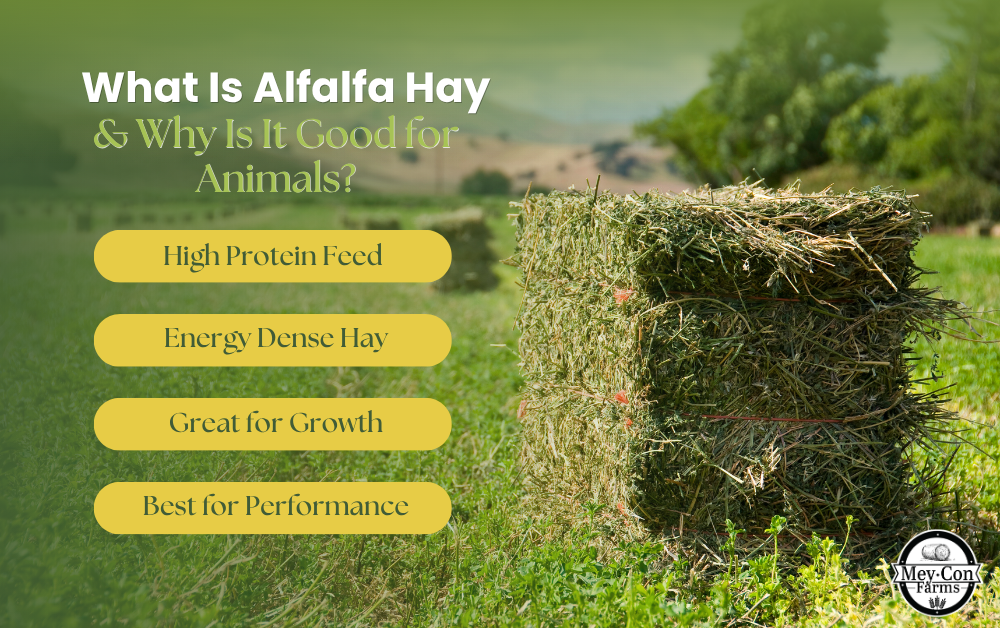
When it comes to feeding your animals, not all hay is created equal. Some types are better for everyday feeding, while others are packed with nutrients for growth, performance, and recovery.
One of the most popular and nutrient-rich options is alfalfa hay.
But what exactly is alfalfa hay, and why is it such a valuable feed choice for so many animals?
In this guide, we’ll break down what it is, its benefits, and when it makes the most sense to include it in your feeding program.
What Is Alfalfa Hay?
Alfalfa hay is made from the alfalfa plant, a legume crop grown specifically for its high nutritional value. Unlike grass hays like timothy or orchardgrass, alfalfa is naturally richer in protein, calcium, and energy.
Alfalfa as a Legume Crop
Legume hays are different from grass hays because they:
- Contain more protein
- Provide more energy per bale
- Offer higher levels of key nutrients
This makes alfalfa an excellent option for animals that need more than just maintenance-level feeding.
How It Is Made
Alfalfa is:
- Grown in fields and harvested at specific stages
- Cut, dried, and cured to preserve nutrients
- Baled into small square or round bales for easy storage and feeding
The timing of harvest (cutting) plays a big role in the final quality and nutrient content.
Why Is Alfalfa Hay Good for Animals?
Alfalfa hay stands out because it delivers a concentrated source of nutrition that supports a wide range of animal needs.
High Protein Content
Protein is essential for:
- Muscle development
- Growth in young animals
- Recovery in working animals
Alfalfa naturally contains higher protein levels than most grass hays, making it ideal for animals that need to build or maintain body condition.
Rich in Nutrients and Energy
Alfalfa is more calorie-dense than many other hay types. This makes it especially useful for:
- Animals that need to gain weight
- High-performance animals
- Situations where additional energy is required
High Calcium Levels
Alfalfa also provides higher calcium content, which supports:
- Bone development
- Milk production in lactating animals
- Overall health and strength
What Animals Benefit Most from Alfalfa Hay?
Alfalfa hay isn’t just for one type of animal. It can be used across a wide range of feeding programs.
Horses
Alfalfa is often used for:
- Performance horses needing extra energy
- Underweight horses that need to gain condition
- Young horses in growth stages
Livestock (Cattle, Goats, Sheep)
For livestock, alfalfa works well for:
- Dairy animals producing milk
- Growing animals
- Animals with higher nutritional demands
Other Animals
Alfalfa can also benefit:
- Small livestock
- Farm animals with increased energy needs
- Feeding programs that require nutrient-dense forage
When Should You Feed Alfalfa Hay?
While alfalfa is highly beneficial, timing and purpose matter.
Growth and Development Stages
Alfalfa is ideal for:
- Young animals
- Pregnant or lactating animals
- Animals building muscle or strength
High-Energy Needs
It’s also a great option for:
- Working animals
- Performance animals
- Animals needing to gain weight
Supplemental Feeding
In many cases, alfalfa is used alongside grass hay to create a more balanced feeding program.
Are There Any Downsides?
Like any feed, alfalfa isn’t the perfect choice for every situation.
It Can Be Too Rich for Some Animals
Animals on maintenance diets may not need the extra nutrients, making grass hay a better everyday option.
Risk of Overfeeding
Because it’s calorie-dense, feeding too much alfalfa can lead to:
- Unwanted weight gain
- Nutritional imbalances
The Importance of Balance
Many farms find success by combining alfalfa with grass hay to get the best of both worlds—nutrition and fiber.
Alfalfa vs Grass: What’s the Difference?
Understanding how alfalfa compares to grass helps you make better feeding decisions.
Nutritional Comparison
- Alfalfa = higher protein, calcium, and energy
- Grass hay = higher fiber, more balanced for daily feeding
Best Use Cases
- Choose alfalfa for growth, performance, and weight gain
- Choose grass hay for maintenance and long-term feeding
In many cases, using both together provides the most effective results.
How to Choose High-Quality Alfalfa Hay
Not all alfalfa is the same. Quality matters just as much as type.
What to Look For
- Bright green color
- Leafy, soft texture
- Clean, mold-free bales
- Minimal dust
Why Quality Matters
High-quality hay ensures:
- Better nutrition
- Improved animal health
- Less waste during feeding
Is Alfalfa Hay Right for Your Animals?
Alfalfa hay is one of the most nutrient-dense forage options available, making it a powerful tool in many feeding programs.
It works best for:
- Growing animals
- High-performance animals
- Livestock with increased nutritional needs
For everyday feeding, it’s often most effective when used alongside grass hay to create a balanced diet.
Looking for High-Quality Alfalfa Hay?
At Mey-Con Farms, we provide premium alfalfa hay designed to meet the needs of your animals.
We offer:
- High-quality alfalfa hay with multiple cutting options
- Consistent, clean, and nutrient-rich forage
- Flexible bulk ordering options
- Reliable delivery across Pennsylvania, Maryland, Virginia, and West Virginia
Whether you need a one-time order or a steady supply, we’re here to help you find the right solution.