If you’ve ever bought hay or talked with a supplier, you’ve probably heard the term “cutting.” But what does it actually mean—and why does it matter?
One of the most commonly requested options is second cutting hay. It’s often considered the “sweet spot” between quality, nutrition, and usability for a wide range of animals.
In this guide, we’ll break down what second cutting hay is, how it compares to other cuttings, and when it’s the right choice for your feeding program.
What Does “Second Cutting” Mean?
Understanding Hay Cuttings
Hay isn’t harvested just once per season. Farmers cut and bale hay multiple times as it regrows throughout the growing season. Each harvest is called a cutting.
- First cutting = the first harvest of the year
- Second cutting = the regrowth harvested after the first cut
- Third (and later) cuttings = additional regrowth harvests
Each cutting has different characteristics depending on growth stage, weather, and timing.
When Second Cutting Occurs
Second cutting typically takes place in early to mid-summer, after the field has had time to regrow following the first harvest.
The exact timing depends on:
- Weather conditions
- Rainfall and temperature
- Growth rate of the crop
Because it grows during warmer conditions, second cutting often develops a different texture and nutrient profile than earlier cuttings.
What Makes Second Cutting Hay Different?
Second cutting hay stands out because it offers a balance that many farmers and animal owners are looking for.
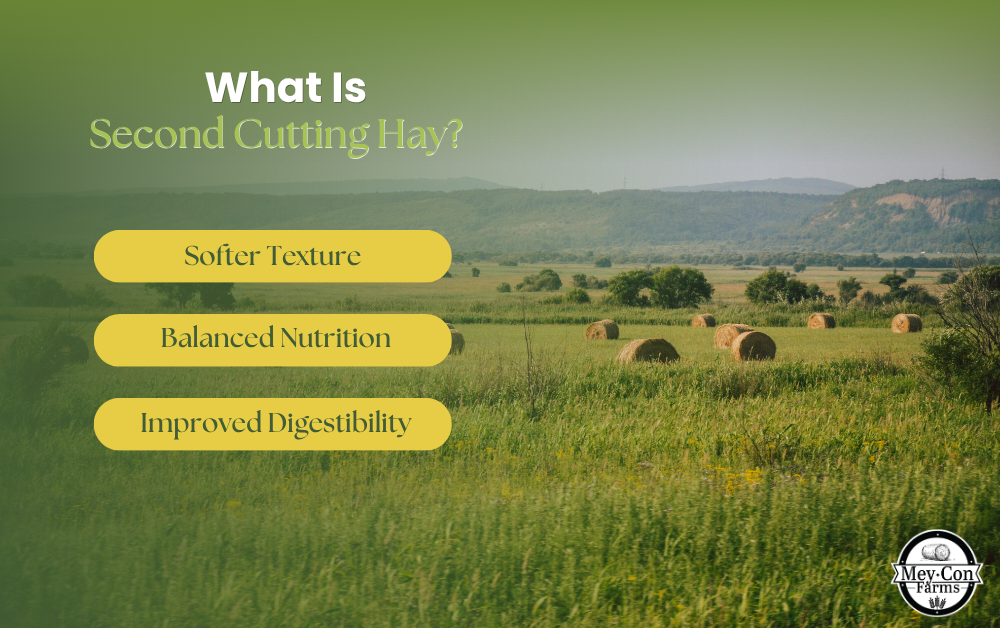
Softer Texture
Compared to first cutting, second cutting is:
- Less stemmy
- More leafy
- Easier for animals to chew
This improved texture often makes it more appealing and easier to consume.
Balanced Nutrition
Second cutting hay typically provides:
- Moderate protein levels
- Good fiber content
- A well-rounded nutrient profile
It’s not as coarse as first cutting and not as rich as later cuttings, making it a great middle-ground option.
Improved Digestibility
Because of its softer structure and balanced nutrients, second cutting is generally:
- Easier to digest
- More efficient for feeding programs
- Suitable for a wide range of animals
Second Cutting vs First Cutting
Understanding how second cutting compares to first cutting can help you make better feeding decisions.
Texture and Appearance
- First cutting: Coarser, more stems, thicker stalks
- Second cutting: Softer, greener, more leafy
Nutritional Differences
- First cutting: Higher fiber, lower protein
- Second cutting: More balanced protein and fiber
Best Use Cases
- First cutting works well when animals need more fiber
- Second cutting is better for general feeding and versatility
Is Second Cutting Hay Better Than Third Cutting?
It depends on your goals.
Nutritional Comparison
- Third cutting: Higher protein, lower fiber, very soft
- Second cutting: More balanced overall nutrition
Feeding Applications
- Third cutting is often used for high-performance or specialty feeding
- Second cutting is better suited for everyday feeding programs
For many operations, second cutting offers the best mix of quality and consistency.
What Animals Benefit Most from Second Cutting Hay?
One of the biggest advantages of second cutting hay is how versatile it is.
Horses
- Ideal for maintenance diets
- Easy to chew and digest
- Palatable for consistent feeding
Livestock (Cattle, Goats, Sheep)
- Works well for general feeding
- Supports balanced nutrition
- Suitable for a wide range of animals
General Farm Use
If you have multiple types of animals, second cutting hay is often a reliable, all-purpose option.
When Should You Use Second Cutting Hay?
Daily Feeding Programs
Second cutting hay is a strong choice for:
- Consistent, long-term feeding
- Balanced nutrition without excess richness
Transitioning Between Cuttings
It works well when:
- Moving from first cutting to later cuttings
- Adjusting feeding programs during the season
When You Want Balance
If you’re looking for hay that is:
- Not too coarse
- Not too rich
- Easy to manage
Second cutting is often the ideal solution.
How to Choose High-Quality Second Cutting Hay
Not all hay is the same—even within the same cutting.
What to Look For
- Bright green color
- Leafy structure
- Clean, fresh smell
- Minimal dust and no mold
Why Quality Matters
High-quality hay:
- Improves digestion
- Reduces waste
- Supports better overall animal health
Is Second Cutting Hay Right for You?
Second cutting hay is one of the most popular choices for a reason.
It offers:
- A balance of fiber and nutrients
- A softer, more palatable texture
- Versatility across different animals
For many feeding programs, it provides the consistency and quality needed for everyday use.