Choosing the right hay can make a big difference in your animals’ health, digestion, and overall feeding routine. While options like alfalfa and timothy hay often get the most attention, Orchardgrass hay has become a popular choice for many farms and animal owners because of its balance of nutrition, softness, and versatility.
But what exactly makes Orchardgrass hay beneficial?
In this guide, we’ll break down the benefits of Orchardgrass hay, what animals it works best for, and why it’s a dependable option for many feeding programs.
What Is Orchardgrass Hay?
Orchardgrass hay is a grass hay commonly used for feeding horses, livestock, and other farm animals. It’s known for its softer texture, pleasant smell, and balanced nutritional profile.
Orchardgrass as a Grass Hay
Unlike legume hays like alfalfa, Orchardgrass:
- Contains moderate protein levels
- Provides high fiber content
- Supports balanced, everyday feeding
This makes it a practical option for animals that need consistent nutrition without excessive calories or protein.
Why Orchardgrass Is Popular
Many animal owners prefer Orchardgrass because it:
- Has a softer texture than some other grass hays
- Is easy for animals to eat
- Works well in long-term feeding programs
Its versatility makes it useful for a wide range of animals and feeding situations.
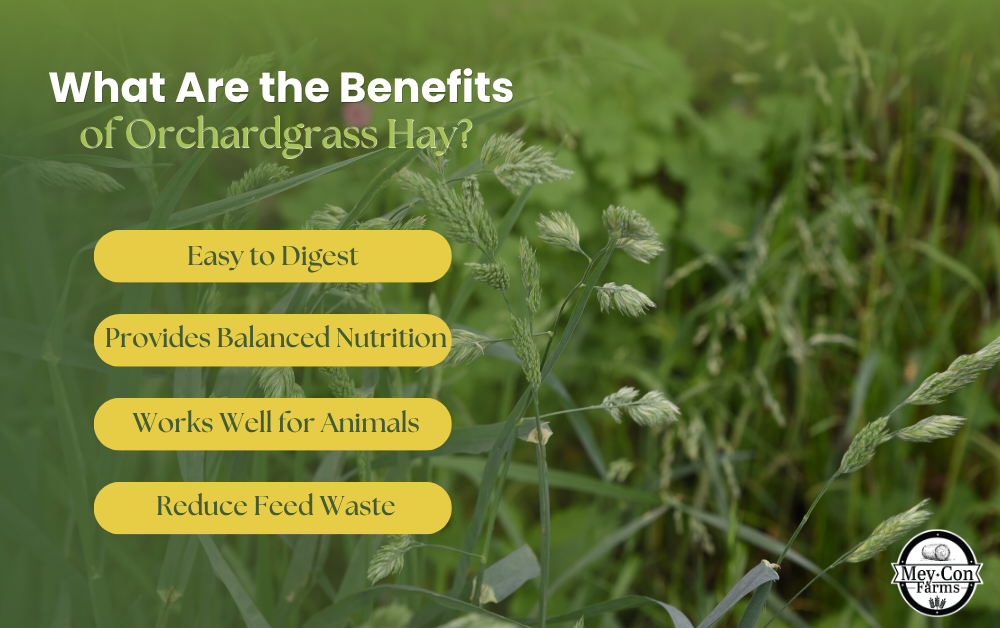
Orchardgrass Hay Is Easy to Digest
One of the biggest benefits of Orchardgrass hay is its digestibility.
High Fiber Content
Fiber is essential for:
- Healthy digestion
- Gut support
- Consistent feeding routines
Orchardgrass naturally provides the fiber many animals need to maintain healthy digestive systems.
Softer Texture
Compared to coarser hay types, Orchardgrass is often:
- Softer
- Less stemmy
- Easier to chew
This makes it especially appealing for animals that prefer softer forage.
Orchardgrass Hay Provides Balanced Nutrition
Orchardgrass is often considered a middle-ground option because it delivers dependable nutrition without being overly rich.
Moderate Protein Levels
Orchardgrass contains:
- More moderate protein levels than alfalfa
- Balanced nutrition for maintenance feeding
It works well for animals that don’t require extremely high-energy diets.
Consistent Energy Source
Because it isn’t overly calorie-dense, Orchardgrass helps:
- Maintain healthy body condition
- Support stable feeding programs
- Reduce the risk of overfeeding nutrients
Orchardgrass Hay Works Well for Many Animals
Another reason Orchardgrass is so popular is because it’s highly versatile.
Horses
Orchardgrass is commonly used for:
- Adult horses on maintenance diets
- Horses needing consistent forage
- Feeding programs focused on balanced nutrition
Many horse owners appreciate its softness and palatability.
Livestock (Cattle, Goats, Sheep)
For livestock, Orchardgrass works well for:
- General feeding programs
- Balanced nutrition
- Mixed feeding operations
Small Farm Animals
Orchardgrass can also benefit:
- Small livestock
- Farm animals requiring fiber-rich diets
- Animals needing softer forage options
Orchardgrass Hay Can Help Reduce Feed Waste
Hay waste can become expensive over time, especially in larger feeding programs.
Palatable for Animals
Because Orchardgrass is often softer and leafier, animals are more likely to:
- Eat it consistently
- Waste less during feeding
Softer and Leafier Structure
Compared to coarse, stem-heavy hay, Orchardgrass tends to leave behind less unusable material.
This can help improve feeding efficiency and reduce waste costs.
Orchardgrass Hay vs Other Hay Types
Understanding how Orchardgrass compares to other hay options can help you choose the right fit.
Orchardgrass vs Timothy
- Orchardgrass is often softer
- Timothy hay typically contains more coarse stems
- Both are excellent grass hay options for maintenance feeding
Orchardgrass vs Alfalfa
- Orchardgrass is lower in protein and calcium
- Alfalfa is richer and more energy-dense
- Orchardgrass is often better for balanced, everyday feeding
Does Orchardgrass Hay Cutting Matter?
Just like other types, cutting impacts the texture and nutrition of Orchardgrass hay.
First, Second, and Third Cutting Differences
- First cutting: More fiber and stems
- Second cutting: Softer and more balanced
- Third cutting: Leafier and more digestible
Choosing the Right Cutting
The best cutting depends on:
- Your animals’ nutritional needs
- Desired softness and digestibility
- Feeding goals
Many farms prefer second cutting Orchardgrass because of its balance between nutrition and texture.
How to Choose High-Quality Orchardgrass Hay
Not all Orchardgrass hay is the same. Quality matters just as much as hay type.
What to Look For
High-quality Orchardgrass hay should have:
- A bright green color
- A fresh smell
- Minimal dust
- No mold or moisture damage
Why Quality Matters
Better-quality hay:
- Supports healthier feeding programs
- Reduces waste
- Improves digestion and nutrition
Why Orchardgrass Hay Is a Popular Choice
Orchardgrass hay continues to be a popular forage option because it offers:
- Good digestibility
- Balanced nutrition
- Soft texture and palatability
- Versatility across many animals
For many farms and animal owners, it’s a dependable everyday feeding solution that fits well into a variety of feeding programs.
Looking for High-Quality Orchardgrass Hay?
At Mey-Con Farms, we provide premium Orchardgrass hay designed to support reliable, consistent feeding.
We offer:
- High-quality hay
- Multiple cutting options
- Bulk and recurring delivery services
- Delivery across Pennsylvania, Maryland, Virginia, and West Virginia
Whether you need hay for horses, livestock, or general farm use, we’re here to help.