When choosing hay for your animals, finding the right balance between nutrition and digestibility is important. Some hay types provide high protein and energy, while others focus more on fiber and consistent daily feeding.
That’s why many farms and animal owners choose an Alfalfa/Orchardgrass mix.
This popular hay blend combines the nutrient-rich qualities of alfalfa with the fiber and softness of orchardgrass, creating a balanced forage option for many feeding programs.
In this guide, we’ll explain what an Alfalfa/Orchardgrass mix is, its benefits, and why it works well for a wide range of animals.
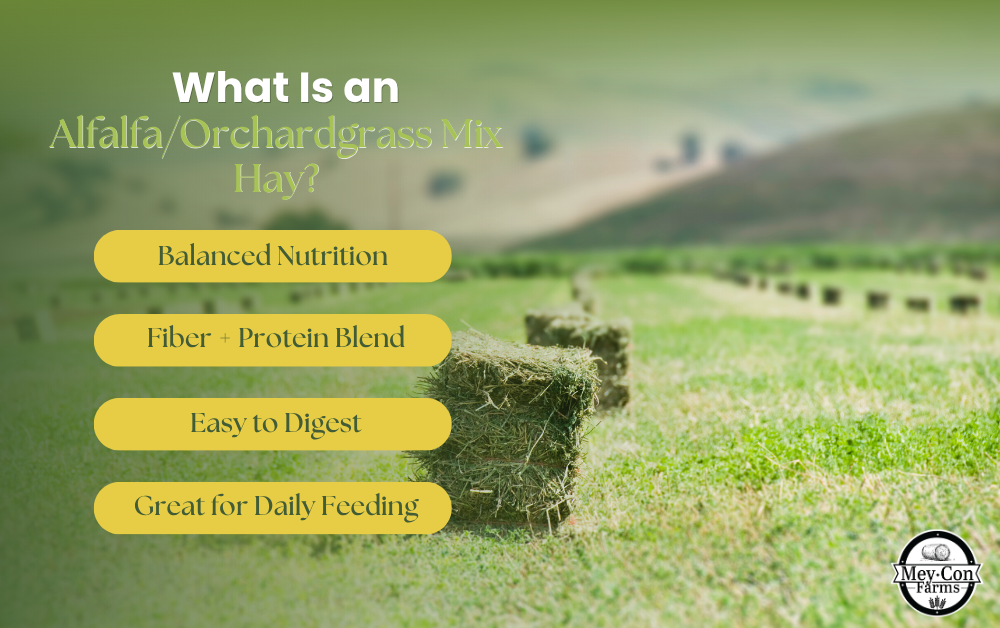
What Is an Alfalfa/Orchardgrass Mix?
An Alfalfa/Orchardgrass mix is exactly what it sounds like—a blend of:
- Alfalfa hay
- Orchardgrass hay
By combining these two forage types, the hay provides a more balanced nutritional profile than either one alone
Combining Legume and Grass Hay
Alfalfa is a legume hay, known for:
- Higher protein levels
- Increased calcium
- Greater energy density
Orchardgrass is a grass hay, known for:
- Higher fiber content
- Softer texture
- Balanced daily nutrition
Together, they create a blend that supports both nutrition and digestibility.
Why Hay Blends Are Popular
Mixed hay has become increasingly popular because it:
- Offers balanced feeding
- Works well for many animals
- Helps avoid overly rich or overly coarse diets
For many farms, blended hay provides a practical middle-ground solution.
What Are the Benefits of an Alfalfa/Orchardgrass Mix?
There are several reasons animal owners choose this type of hay blend.
Balanced Nutrition
One of the biggest benefits is the balance it provides.
An Alfalfa/Orchardgrass mix typically offers:
- Moderate protein levels
- Balanced energy content
- Healthy fiber support
This makes it useful for both maintenance and moderate-performance feeding programs.
Improved Digestibility
Orchardgrass contributes fiber that supports healthy digestion, while alfalfa adds nutrient density.
Together, they create forage that is:
- Easier to digest
- More balanced for daily feeding
- Suitable for a variety of animals
Better Palatability
Many animals enjoy mixed hay because it:
- Has a softer texture
- Includes leafy forage
- Provides a more appealing feeding experience
This can help encourage consistent eating and reduce waste.
What Animals Benefit from Alfalfa/Orchardgrass Mix Hay?
One of the advantages of mixed hay is its versatility.
Horses
For horses, this blend works well for:
- Maintenance feeding
- Moderate-performance diets
- Horses needing balanced nutrition without excessive richness
It’s a popular option for owners looking for dependable daily forage.
Livestock (Cattle, Goats, Sheep)
Livestock owners often use Alfalfa/Orchardgrass mix for:
- General feeding programs
- Balanced nutrition
- Animals needing moderate energy intake
Mixed Animal Operations
Farms with multiple types of animals often prefer mixed hay because it:
- Simplifies feeding programs
- Provides flexibility
- Works well across different species
Alfalfa/Orchardgrass Mix vs Pure Alfalfa
While pure alfalfa is highly nutritious, it may be too rich for some animals or feeding programs.
Protein and Calcium Differences
- Pure alfalfa contains higher protein and calcium
- Mixed hay provides more moderate nutrition
This balance often makes mixed hay easier to manage for everyday feeding.
Fiber and Digestibility
Adding orchardgrass increases fiber content, helping:
- Support digestion
- Improve feeding consistency
- Balance nutrient density
Feeding Applications
Pure alfalfa is commonly used for:
- High-performance animals
- Weight gain programs
- Lactating animals
Mixed hay is often preferred for:
- Daily feeding
- Maintenance diets
- Balanced nutrition programs
Alfalfa/Orchardgrass Mix vs Timothy Hay
These two options serve slightly different feeding goals.
Nutritional Comparison
Compared to Timothy hay, an Alfalfa/Orchardgrass mix generally provides:
- More protein
- More energy
- A richer nutrient profile
Texture and Feeding Differences
Mixed hay is often:
- Softer and leafier
- More nutrient-dense
- Better suited for moderate-performance feeding
Timothy hay remains an excellent option for lower-calorie maintenance diets.
Does Cutting Matter for Mixed Hay?
Yes—cutting affects texture, digestibility, and nutrition.
First vs Second Cutting
- First cutting: More stemmy and fiber-heavy
- Second cutting: Softer, leafier, and more balanced
Many farms prefer second cutting mixed hay because of its softer texture and balanced nutrient profile.
Choosing the Right Cutting
The best cutting depends on:
- Animal type
- Feeding goals
- Desired texture and nutrition levels
How to Choose High-Quality Alfalfa/Orchardgrass Mix Hay
Not all mixed hay is the same. Quality matters.
What to Look For
High-quality hay should have:
- Bright green color
- A leafy structure
- Minimal dust
- No mold or moisture damage
Why Consistency Matters
Consistent hay quality helps:
- Support healthy feeding programs
- Reduce waste
- Improve overall feed efficiency
Why Many Farms Choose Mixed Hay
An Alfalfa/Orchardgrass mix combines the best qualities of both forage types:
- Balanced nutrition
- Improved digestibility
- Softer texture
- Versatility for many animals
For many farms and animal owners, it provides a dependable feeding option that supports both performance and everyday nutrition.
Looking for High-Quality Alfalfa/Orchardgrass Mix Hay?
At Mey-Con Farms, we provide premium mixed hay options designed to meet the needs of your animals and feeding program.
We offer:
- High-quality Alfalfa/Orchardgrass blends
- Multiple cutting options
- Bulk and recurring delivery services
- Delivery across Pennsylvania, Maryland, Virginia, and West Virginia
Whether you need a one-time order or ongoing supply, our team is here to help.